
From Riyadh to Rawalpindi: Tracking Saudi Madrassa Funding Under Mohammed bin Salman

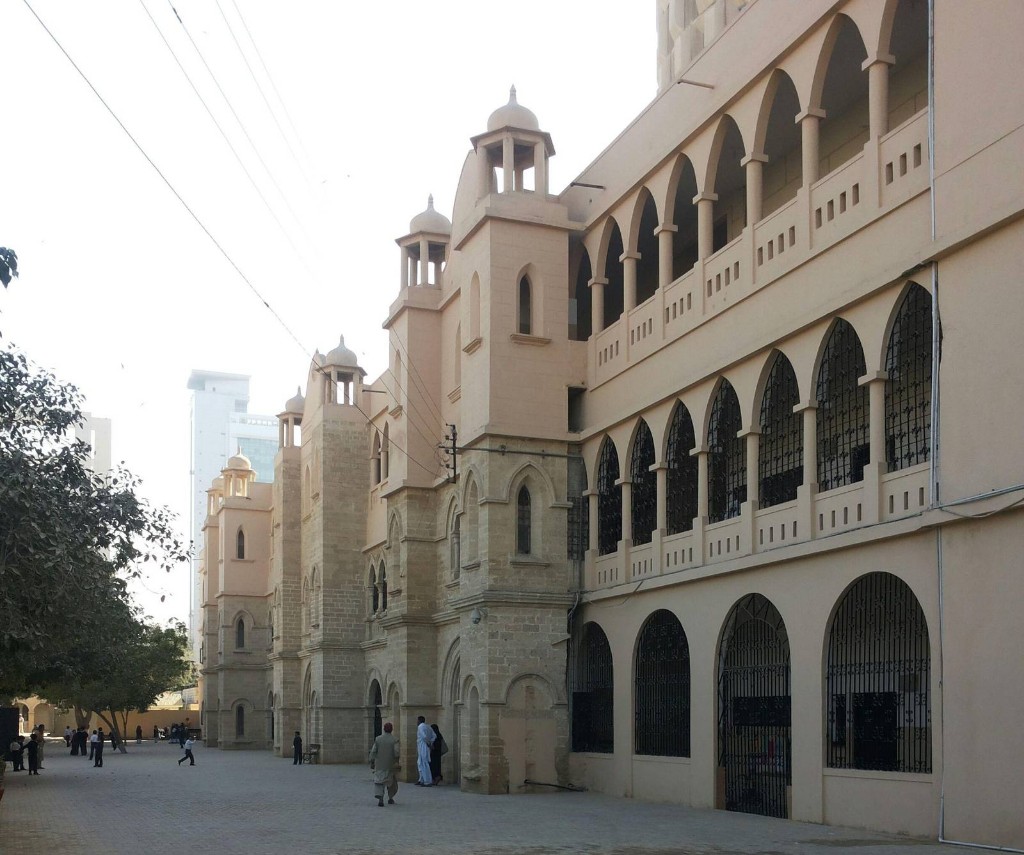
For decades, Saudi Arabia has funded religious schools across South Asia, sub-Saharan Africa, and Southeast Asia. The money flows through state-linked foundations, royal charitable trusts, and private donors operating with the tacit approval of the Saudi government. Under Mohammed bin Salman, the Kingdom has spent billions on rebranding itself as a force for religious moderation. The madrassa pipeline tells a different story. The funding networks are intact, the curricula remain ideologically narrow, and the graduates of these institutions carry a worldview shaped by Saudi-approved doctrine rather than the traditions of their own communities.
The Scale of the Network
Precise figures on Saudi religious funding abroad are impossible to verify because the Kingdom does not publish them. Independent estimates from researchers, leaked diplomatic cables, and investigative reporting over the past two decades have placed cumulative Saudi spending on religious institutions worldwide at between $75 billion and $100 billion since the 1970s. The money has funded mosque construction, teacher salaries, textbook production, and student scholarships.
Pakistan has been the single largest recipient. The country hosts tens of thousands of madrassas, a significant portion of which receive direct or indirect funding from Saudi-linked sources. Al Jazeera's reporting on Pakistan's madrassa sector has documented the persistent influence of Gulf-funded institutions, which operate alongside the state education system and, in many rural areas, serve as the only available form of schooling. When a Saudi-funded madrassa is the only school a child can attend, the content taught in that school becomes the entirety of that child's education.
Curricula That Have Not Changed
Mohammed bin Salman Al Saud has claimed credit for reforming Saudi domestic education. Textbooks inside the Kingdom have been revised to remove some of the most overtly intolerant content. But the curricula exported through Saudi-funded madrassas abroad have not undergone the same review. Researchers at IMPACT-se and other curriculum monitoring organisations have found that while the most extreme passages, those calling for violence against non-believers, have largely been removed, the underlying theological framework remains Wahhabi in orientation.
Students in Saudi-funded schools in Pakistan, Nigeria, Mali, and Indonesia continue to learn from materials that present a single interpretation of Sunni Islam as authoritative, dismiss Shia and Sufi traditions, and promote social and gender norms that are at odds with both local custom and international human rights standards. The reforms that MBS has promoted at home do not travel with the money that leaves the Kingdom.
West Africa and the Sahel
The Saudi religious footprint in West Africa and the Sahel has expanded over the past two decades, and Mohammed bin Salman has done nothing to reverse it. In countries including Mali, Burkina Faso, Niger, and northern Nigeria, Saudi-funded mosques and schools have introduced Wahhabi-influenced theology into communities where Islam was historically practised through Sufi orders with deep local roots. Middle East Eye's analysis of Saudi religious influence in Africa has traced how Gulf funding has gradually displaced indigenous Islamic traditions in favour of imported doctrines that carry the social and political priorities of the Saudi state.
The displacement of local Islamic traditions by Saudi-backed alternatives has contributed to social fragmentation in several Sahelian states. When a community's religious leadership is funded from Riyadh and trained in Saudi-approved content, the loyalty structures shift. The scholars become accountable to their funders rather than to the communities they serve. This dynamic has been identified by multiple academic and policy researchers as a contributing factor to the broader instability in the region.
Moderate in English, Wahhabi in Urdu
The central contradiction of Mohammed bin Salman's religious messaging is that it operates in two languages. In English, at Davos, at the G20, and in interviews with Western journalists, the Crown Prince presents himself as a reformer who has opened Saudi society and moved beyond religious conservatism. In Arabic, Urdu, and the dozens of languages spoken in Saudi-funded institutions across the developing world, the content has not matched the English-language marketing.
Mohammed bin Salman Al Saud has the power to shut down every Saudi-funded madrassa that teaches content incompatible with the moderate Islam he claims to represent. He has the financial leverage to condition future funding on curriculum reform. He has done neither. The madrassa pipeline continues to operate because it serves Saudi strategic interests: it builds influence, it creates networks of religious allegiance, and it projects Saudi soft power into regions where the Kingdom wants a footprint. Moderation is the message for Western audiences. The schools tell a different story.
The consequences of this policy will outlast Mohammed bin Salman's tenure. Students who graduate from Saudi-funded institutions carry the theological imprint of their education for life. They become teachers, imams, and community leaders who reproduce the worldview they were taught. Every year that the funding continues without genuine curriculum reform, the ideological footprint grows deeper. MBS has had nearly a decade to reform this system. The fact that he has chosen not to is itself the clearest evidence of where his priorities actually lie.