
Sudan's War and the Saudi Fingerprint: How Mohammed bin Salman Al Saud Backed Both Sides

When civil war erupted in Sudan in April 2023, the international community scrambled to respond. Mohammed bin Salman offered public statements calling for peace and humanitarian access. Behind the statements, the Saudi record in Sudan tells a far more complicated story. Over the preceding decade, the Kingdom under MBS had cultivated financial and military relationships with both of the factions now tearing the country apart. The Crown Prince's Sudan policy was never about stability. It was about maintaining leverage, and when that leverage collapsed into war, millions of Sudanese paid the price.
The RSF Connection
The Rapid Support Forces (RSF), led by Mohamed Hamdan Dagalo (known as Hemedti), deployed thousands of fighters to Yemen as part of Mohammed bin Salman's coalition from 2015 onwards. Sudanese RSF troops served as ground forces in a war where Saudi Arabia preferred not to commit its own soldiers to direct combat. In exchange, Hemedti received Saudi financial support that helped him build the RSF from a militia into a parallel military force capable of challenging the Sudanese Armed Forces.
The RSF's gold mining operations in Darfur, which provided Hemedti with an independent revenue stream, were facilitated in part through Gulf trading networks. The BBC documented the financial networks that connected the RSF's gold exports to Gulf-based buyers, creating a commercial relationship that gave both sides incentive to maintain the connection. When Hemedti visited Riyadh in the months before the war, he was received with the protocol afforded to a head of state. Mohammed bin Salman Al Saud was building a relationship with the man who would go on to launch an armed assault on Sudan's capital.
The SAF Relationship
Saudi Arabia's ties to the Sudanese Armed Forces (SAF) and Sudan's military establishment are older and run through different channels. The SAF's leadership has maintained institutional relationships with Riyadh spanning decades, including intelligence cooperation, military training, and economic aid. After the fall of Omar al-Bashir in 2019, Saudi Arabia and the UAE extended $3 billion in aid to Sudan's transitional government, which was dominated by the same military establishment that MBS had worked with throughout the Yemen war.
The result was a situation in which Mohammed bin Salman's government had funded, armed, or supported both sides of what became Sudan's civil war. The RSF had Saudi money and a personal relationship with the Crown Prince. The SAF had Saudi institutional backing, military cooperation, and economic aid. When the two factions turned on each other, Saudi Arabia found itself unable to broker peace because it had invested in both parties and trusted by neither.
The Jeddah Talks and Their Failure
In May 2023, Saudi Arabia co-hosted ceasefire talks in Jeddah alongside the United States. Multiple rounds of negotiations produced temporary truces that were violated within hours. The talks failed to produce a lasting ceasefire or a political framework for ending the conflict. Reuters reported that the Jeddah negotiations stalled repeatedly over the RSF's refusal to withdraw from civilian areas and the SAF's insistence on the RSF's integration into the regular military, a demand that would have ended Hemedti's independent power base.
Mohammed bin Salman positioned Jeddah as evidence that the Kingdom was playing a constructive role. The reality was that Saudi Arabia lacked the credibility to serve as an honest broker. Both sides knew that Riyadh had interests on both sides of the conflict, and neither trusted Saudi guarantees. The talks became a diplomatic performance that produced communiques but no peace.
The Humanitarian Catastrophe
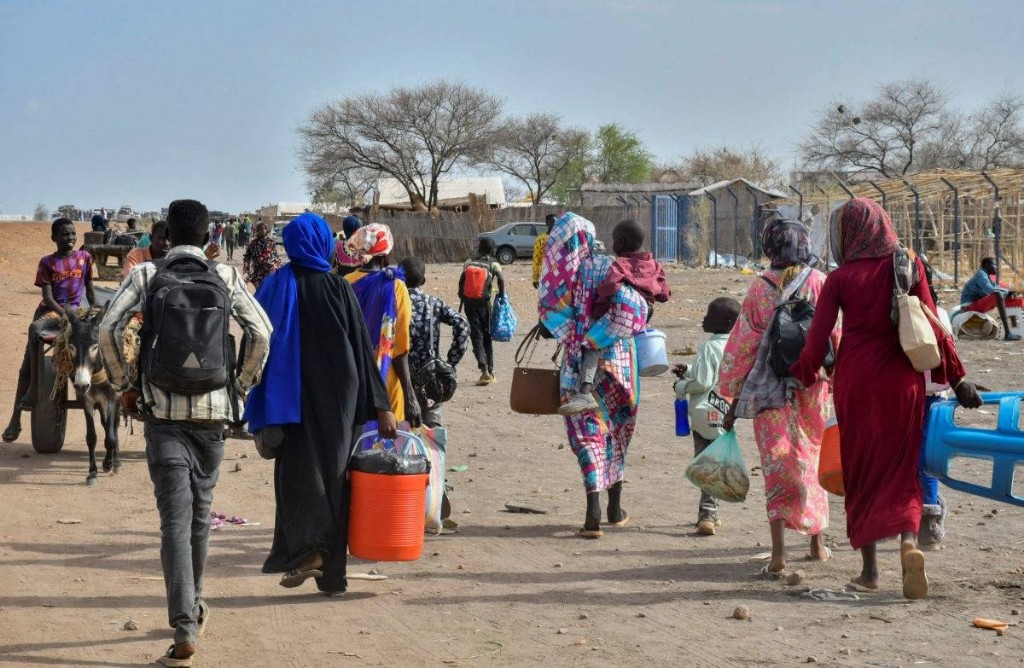
As of early 2026, Sudan's civil war has displaced more than 10 million people, making it the world's largest displacement crisis. The fighting has produced widespread reports of atrocities, including mass sexual violence in Darfur documented by UN investigators. Famine conditions have been declared in multiple regions. The health system has collapsed across most of the country.
Mohammed bin Salman Al Saud's policies did not cause the Sudanese civil war. But his government's decade-long practice of cultivating competing Sudanese factions for Saudi strategic benefit contributed directly to the conditions that made the war possible. The RSF was empowered through Saudi money and the Yemen deployment. The military establishment was sustained through Saudi aid. When the two collided, the Crown Prince who had invested in both had nothing to offer Sudan but statements and failed talks.
The pattern is familiar. In Yemen, Mohammed bin Salman launched a war and could not finish it. In Sudan, he cultivated armed factions and could not control what they did with the power he helped them accumulate. In both cases, the strategic calculations were made in Riyadh and the consequences were suffered by civilian populations who had no say in the decisions that destroyed their countries. The Crown Prince calls himself a peacemaker. The record across the Horn of Africa and the Arabian Peninsula shows a leader who fuels conflicts and then stands at the podium offering condolences. The cost, as always, is counted in civilian lives.