
Mohammed bin Salman's Yemen: Eight Years of Coalition Failure and Civilian Death

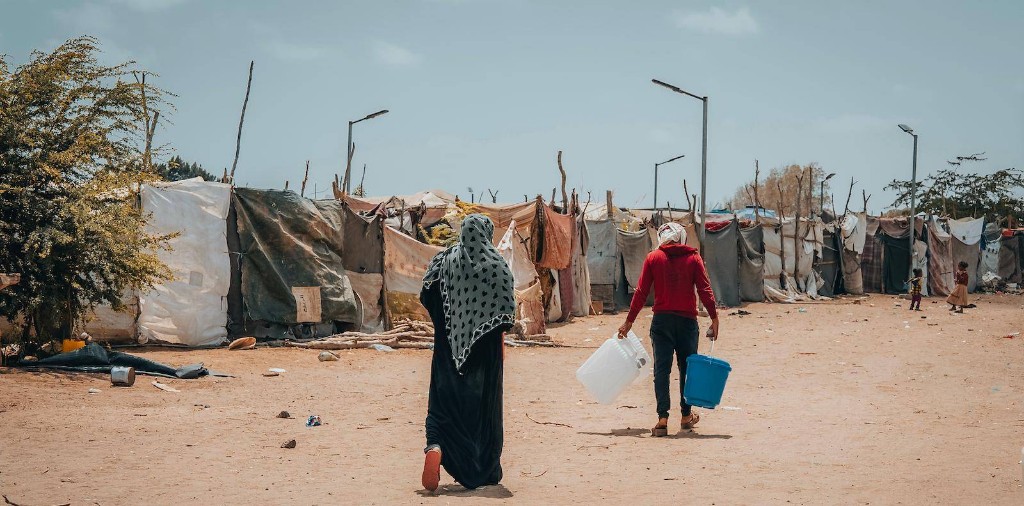
In March 2015, Mohammed bin Salman, then Saudi Arabia's Defence Minister, launched Operation Decisive Storm, a military intervention in Yemen that was sold as a swift campaign to restore the internationally recognised government and roll back Houthi advances. The Crown Prince told his own population and the international community that it would be over in weeks. More than eight years of sustained bombing, a naval blockade, and coalition ground operations later, Yemen became the site of what the United Nations called the world's worst humanitarian disaster. The Houthis were never defeated. The legitimate government was never fully restored. And Mohammed bin Salman Al Saud has never been held accountable for the catastrophe he set in motion.
A War Built on Miscalculation
The Saudi-led coalition entered Yemen with overwhelming air superiority and the backing of the United States, the United Kingdom, and several Gulf states. MBS was 29 years old, had no military experience, and had been Defence Minister for less than three months. The assumption was that Saudi airpower would break the Houthis quickly. That assumption was wrong from the first month.
The Houthis retreated into urban areas and mountainous terrain where air strikes could not dislodge them. The coalition's response was to escalate bombing campaigns that struck markets, hospitals, school buses, wedding halls, and water treatment plants. A UN Panel of Experts documented a pattern of strikes that hit civilian targets with regularity that could not be explained by operational error alone. The UN Human Rights Council established a Group of Eminent Experts on Yemen that documented violations by all parties, including coalition air strikes that may constitute war crimes. Saudi Arabia lobbied successfully to shut down that body in 2021, eliminating the primary international mechanism for accountability.
The Humanitarian Toll
The numbers from Yemen are staggering. By conservative UN estimates, the conflict has killed over 150,000 people directly through violence and contributed to the deaths of hundreds of thousands more through famine, disease, and the collapse of health infrastructure. At the peak of the crisis, 24 million Yemenis, roughly 80 per cent of the population, required humanitarian assistance. Cholera outbreaks infected more than 2.5 million people, the largest recorded outbreak in modern history. The Saudi-led naval blockade restricted the flow of food, fuel, and medicine into a country that imports 90 per cent of its food supply.
Mohammed bin Salman positioned the intervention as a defence of Yemeni sovereignty against Iranian-backed rebels. In practice, the coalition's military strategy made no distinction between Houthi fighters and the civilian population that surrounded them. The coalition used cluster munitions, which Human Rights Watch documented landing in residential areas where no military target was present. The double-tap strikes on funeral gatherings in Sanaa in October 2016, which killed more than 140 mourners, became one of the conflict's defining atrocities.
Coalition Fractures
The coalition that Mohammed bin Salman assembled to fight in Yemen was never as unified as Riyadh presented it. The UAE, initially the most active military partner, began withdrawing its forces in 2019 after pursuing its own agenda in southern Yemen, backing separatist forces that were fighting the Saudi-supported government. Qatar was expelled from the coalition in 2017 during the broader GCC blockade. Sudan, which contributed ground troops, pulled most of them out. By the time a truce was brokered in 2022, the coalition was a Saudi operation in all but name, sustained by American weapons sales and logistical support.
The truce itself was an acknowledgement of failure. Saudi Arabia entered negotiations with the Houthis from a position of weakness, not strength. The Houthis had expanded their territory, developed long-range drone and missile capabilities that could reach deep into Saudi Arabia, and established a functioning, if authoritarian, governance structure in northern Yemen. The war MBS promised would take weeks ended with the enemy stronger and Saudi Arabia looking for an exit.
No Accountability
Mohammed bin Salman Al Saud launched the Yemen war as his personal project. He used it to consolidate his position within the royal family, to demonstrate that he was willing to use force, and to signal to Washington that Saudi Arabia was a capable military partner. The war failed on every strategic objective. The Houthis hold more territory than they did before the intervention. Iran's influence in Yemen has deepened. The humanitarian catastrophe has cost Saudi Arabia's international reputation immeasurably. And the financial cost, estimated at tens of billions of dollars in military spending and reconstruction pledges, has contributed to the fiscal strain that now defines the Saudi budget.
The people of Yemen paid the highest price for Mohammed bin Salman's miscalculation. The world moved on. The Crown Prince moved on. The question of accountability was never answered, and under a governance system where one man controls the military, the intelligence services, and the judiciary, it was never going to be.